
Services for institutions & newsrooms
Media monitoring & discourse analysis
Move from a stream of headlines to a traceable reading of coverage: what is being said, whose voices appear and how the framing changes.
Who & why
When reading individual stories is no longer enough.
For editorial desks, research teams and institutional communications teams following a public issue, a region or a policy debate. The question may be about differences between outlets, the emergence of a narrative or changes across a defined period.
We start with a research question, not a dashboard. Together we define the sources, languages, search terms and period, then combine structured coverage data with editorial interpretation. The report makes its sample and limitations visible so your team can challenge the reading.
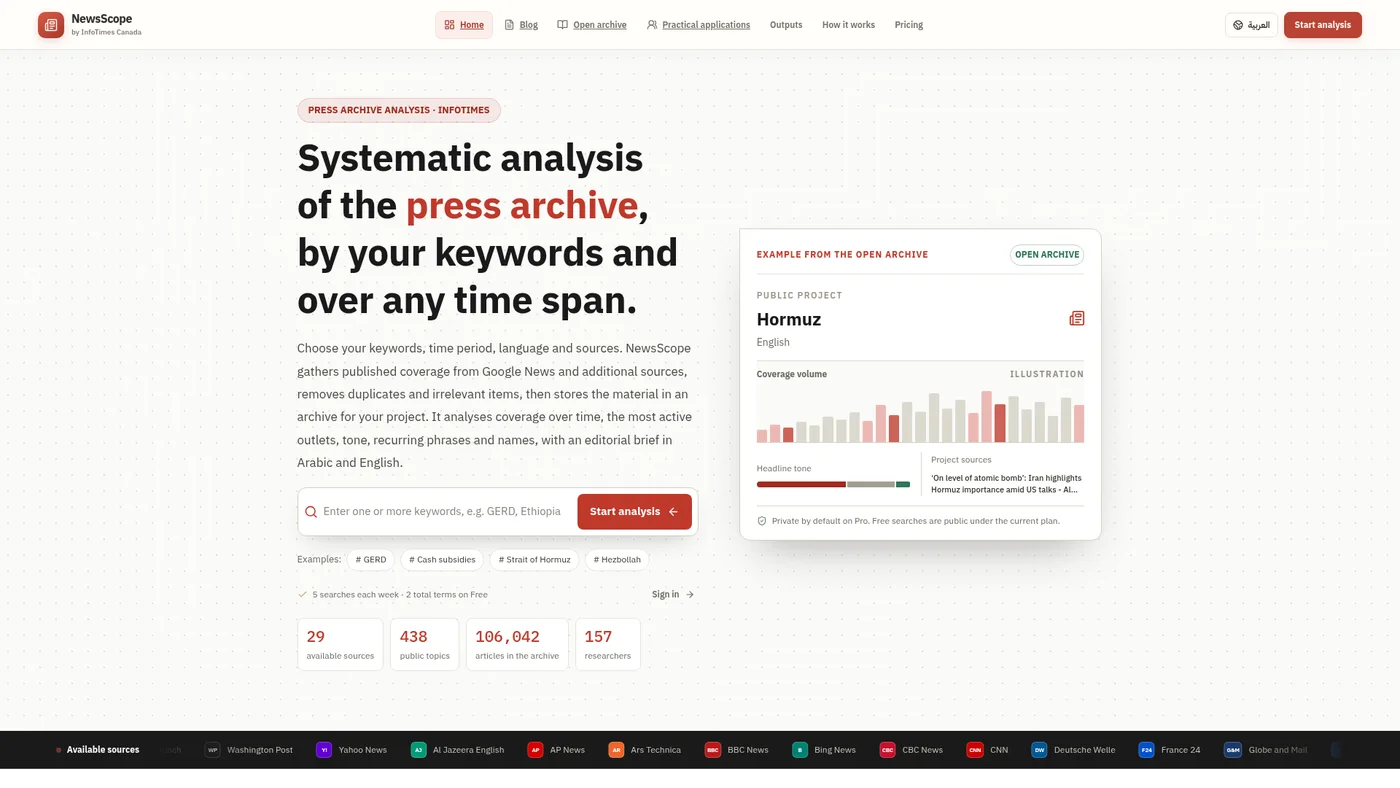
Coverage volume is not audience reach. Automated tone labels are not evidence of intent. Findings describe the agreed source sample, not every conversation or public opinion.
Deliverables
Proposed deliverables, agreed before work begins.
Monitor coverage and analyse narratives, tone and framing across sources and time, with reports and editorial briefs scoped to your organisation.
A documented monitoring plan
Research questions, source list, keyword logic, exclusions, time window and a coding framework for topics, voices or frames.
A structured coverage dataset
An agreed export of article references and available metadata, with collection dates, deduplication rules and notes on missing material.
An analytical editorial brief
A reading of recurring narratives and framing, supported by attributable examples and comparisons across sources or periods.
A repeatable reporting format
A report or briefing template and, when included in scope, a monitoring view, update schedule and handover guidance.
How we work
A clear question. A reviewable handover.
Frame the question
Agree what decision the analysis should inform and which claims the available material can support.
Test the sample
Check search terms and source coverage against a small sample; refine exclusions and classification rules before wider collection.
Analyse and review
Inspect patterns, read representative material and review ambiguous coding with the agreed editorial criteria.
Deliver with the method
Discuss the brief, provide the agreed data and explain limitations, update options and any unanswered questions.
What you supply
What helps us scope a useful project?
- The topic, intended decision and people who will use the findings.
- Priority outlets, languages, geography and a relevant time window.
- Known keywords, spelling variants, exclusions and examples of relevant coverage.
- Any licensed archives or feeds you can lawfully make available, plus the preferred reporting format.
FAQs
Before we start a conversation.
Is this a NewsScope subscription or a bespoke project?
NewsScope is a published InfoTimes product. This service is a separately scoped monitoring and analysis project. We discuss whether the product, bespoke work or a combination fits your question; visiting the product does not imply a client engagement.
Can you monitor every outlet and social platform?
We do not promise universal coverage. The source list depends on technical access, licensing, platform restrictions and the research question. Coverage gaps and changes are documented.
How do you handle Arabic tone and framing?
We agree definitions and review examples in context, including ambiguous language and quotation. Automated labels can assist a workflow, but editorial review and explicit limits remain part of the analysis.
Can reports be recurring?
Yes, recurring briefs can be proposed. Frequency, source availability, review responsibilities and the format of each delivery are agreed in the project scope.
Let’s define a workable scope
Which coverage do you need to understand?
Tell us the topic, sources and period you have in mind, and what decision the analysis should inform. We can then discuss a workable sample and reporting scope.